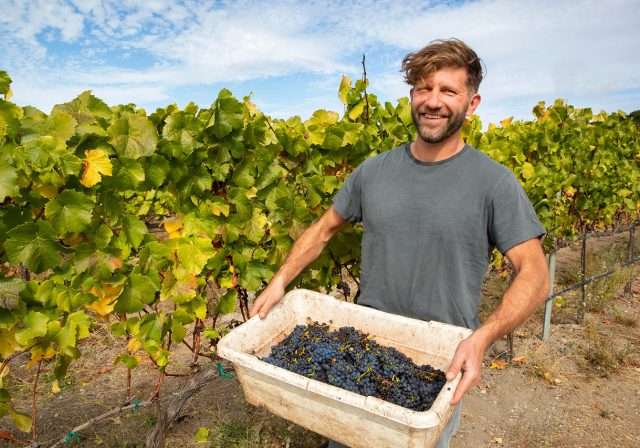
Harvest season has ended, but for winemakers, getting the grapes off the vine is just the beginning. Now it’s time to transform them into something far greater!
After the grapes are picked, the first step is destemming and crushing them lightly—which is usually done by a machine that can handle both tasks. However, some wineries still utilize the manual grape-stomping method, which you’ve no doubt seen. Used for thousands of years, it involves people crushing the grapes with their bare feet!
Why stomp instead of having a machine crush the grapes? Some experts say that stomping provides more control over the flavor of the wine, adding complexity, spice, and texture.
And if the thought of drinking something that once was under someone’s feet makes you a little queasy, don’t worry: First of all, you’ve probably already done it without even knowing! And second, the fermentation process and acidity of grapes eliminates pathogens.
Once the grapes are crushed—by whichever method—what happens next varies. For white wines, typically the juice is pressed from the grapes and the skins left behind. Grapes for red wines, though, go into a vat with their skins after being crushed.
Then, it’s time for fermentation, or the process of converting the sugars into alcohol. Yeast is added to start the process. Afterward, it’s time to press the red grapes for reds (remember, the juice was already extracted from the white grapes).
We’re almost there—depending on how long the wine will be age. Some are stored for months, others for years, depending on the wine and winemaker. They can be aged in steel or oak, and even in different varieties of oak (new, previously used, charred), to provide different flavor profiles.
Finally, it’s time to get that nectar into a bottle—and send the wine on its journey to your glass!